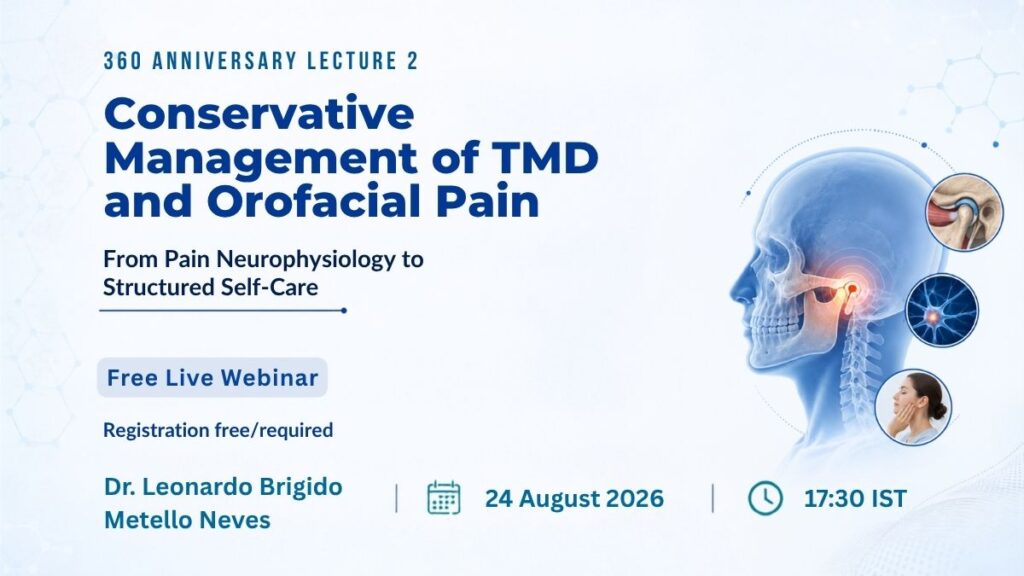
Conservative Management of TMD and Orofacial Pain
Most temporomandibular disorders are muscular, and many respond well to conservative, patient-centred care before a device or medication is considered. This session connects the neurophysiology of masticatory muscle pain with a structured, practical self-care programme that clinicians can introduce from the very first appointment.
